
Dementia- It’s more than loss. There is JOY!
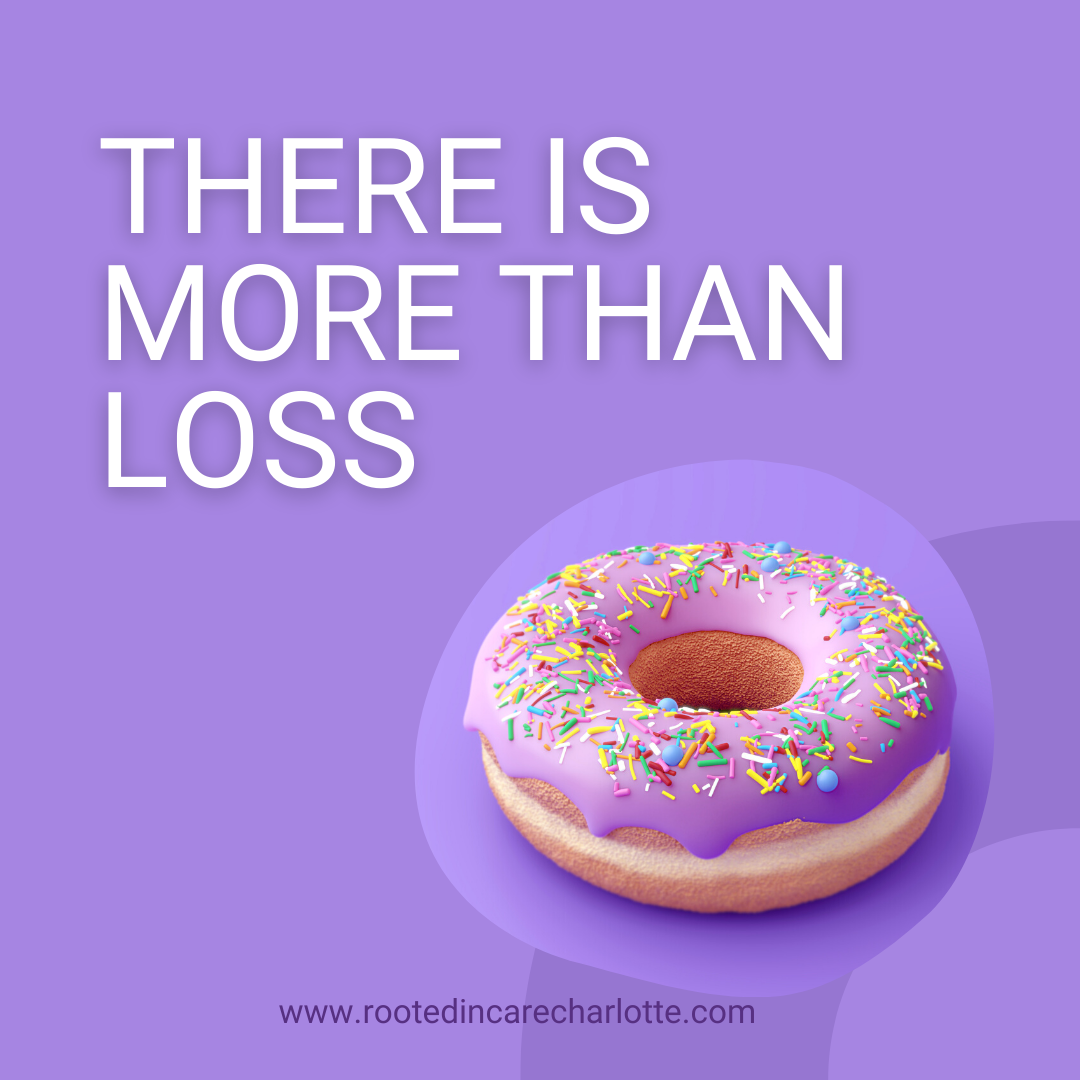
A visual sometimes shared by Teepa Snow and the Positive Approach to Care® (PAC) community in trainings is a donut. Why? This donut is a reminder: in the world of brain change and dementia we often focus on the hole, what is lost, while forgetting to see all that remains.
When we look at the colorful whole of the donut what do we see? How does our perspective shift? For me, there is a whole lot of color, space. How about for you?
Scenario 1:
Someone living with Lewy Body Dementia who usually functions between an Amber and Ruby GEMS® state, but like all of us humans, her rhythms fluctuate. If you referenced many of the dementia rating scales typically used, she would likely be placed in the “later stages.” But this is where those labels can do us a disservice and cause us to miss meaningful moments.
Does this individual “make sense” in traditional terms of language and communication? No. But does she crave connection, relationship, and belonging? YES. So what does my time with her look like? Reflecting back her words. Meeting her where she is in how she is processing language in that moment. To an outsider, our “conversations” might make no sense at all. But if there were no sound, what you would see is smiling, laughter, ease-CONNECTION. JOY!
Scenario 2:
Someone living with Alzheimer’s type dementia who usually functions between a Diamond and Emerald GEMS® state, but again, this fluctuates (think of when you may not have gotten enough sleep or have not eaten in a while-what is your brain state like in those moments?). We all have rhythms and changing brain states throughout the day.
This individual struggles with word finding, sustained attention, and cognitive overload. During one of our sessions, upon my arrival she exclaimed, “I have an idea. Let’s make banana bread!” “YES!” I said. What happened from there? No notable word-finding challenges, the ability to sustain attention for over 30 minutes, dual tasking: mixing while having a conversation. Were there adaptations and supports? Yes. But was she able to make banana bread and experience purpose, connection, and joy? Also YES.
Something important for me (or anyone who supports this person) to know: she used to bake all the time. It was her love language. But given challenges with executive function (e.g., following a recipe) and short-term memory (e.g., “Did I put that ingredient in already?”), she has not baked in quite some time. This moment illustrated that with the right supports and a little patience, she could reconnect with something she loves, and in doing so, experience joy, purpose, and meaningful connection.
So, to circle back the to colorful donut- when we look at the whole donut, not just the hole, it opens us up to what remains and shifts the experience for everyone. It allows for the JOY!
PAC™disclaimer: PAC™ Certified Dementia Educators (PAC CDE/L) are not employees of Positive Approach, LLC. The opinions and views expressed by PAC™ Certified Dementia Educators (PAC CDE/L) do not necessarily reflect the opinions and views of Positive Approach, LLC or any of its employees. Positive Approach, LLC is not liable for any actions by PAC™ Certified Dementia Educators (PAC CDE/L)